Susila Dharma International Association (SDIA) https://susiladharma.org is a global network of local organizations working to provide individuals, families and communities with the tools and support needed to improve their lives. Our members initiate local, culturally appropriate projects in four main areas: healthcare, education, sustainable livelihoods and protection of the environment. SDIA works to build capacity (through mentoring, needs assessments, fundraising, project management, monitoring and evaluation) to develop and sustain our member organizations and demonstrate results. SDIA and its members share a common vision of development that goes from the deeply personal to the community, to the institutional and global levels. With its consultative status with the United Nations Economic and Social Council (ECOSOC) and the UN Children’s Fund (UNICEF) and as a part of the UN Department of Public Information, NGO Section, SDIA’s work embraces the UN’s Sustainable Development Goals and understands development as a positive process of human, social, cultural, environmental, economic and political transformation. As a network, we share our experiences, tools and financial resources to support community-based initiatives in the areas of health, education and sustainable livelihoods. We have members in 30 countries, and we draw our inspiration from the spiritual practice of Subud Susila Dharma, which roughly translated means ‘guided from within to action in the world’.
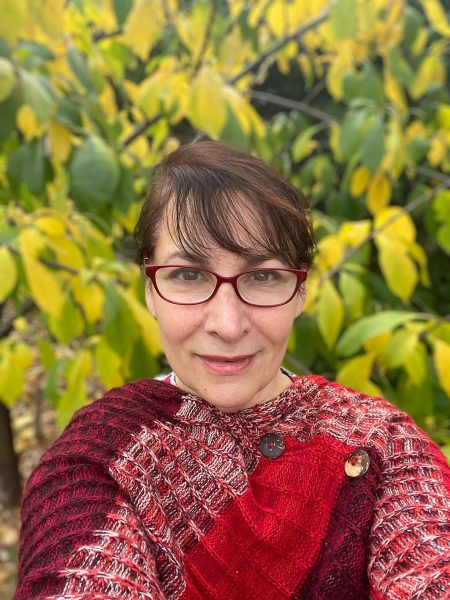
I am the Executive Director of SDIA, so my role is to support our member organizations, our global network and our Board of Directors to realize common objectives – this can be through collaborations, learning events, sharing of tools and methods, telling stories of what works well, and what doesn’t work under what circumstances. In some cases, it involves mobilizing resources to support local projects to deliver services – in health, education, livelihoods and environmental action – that communities need to realise their rights and aspirations.
When I was young, I wanted to be a dancer and a choreographer because I really appreciated the grace and beauty of people moving together in harmony and rhythm. As I got older, I learned that dance was not the only sphere where humans collaborate in harmony and rhythm to make something beautiful – I understood that there remain significant unmet needs in this world and that one of the most fulfilling ways to collaborate is to help communities identify their own objectives and carry out the projects to improve their lives. I eventually studied sociology, and learned about the dance of collective action and the power that we have as human groups to make meaningful and sustainable change. As Margaret Mead once said ‘Never doubt that a small group of thoughtful, committed citizens can change the world; indeed, it's the only thing that ever has’.
I love the people I get to meet, their analysis of what needs to change for communities for them to thrive. I am always amazed that as people get organized; they are joined by others who want to help and support them. There is a feeling of joy once a problem has been clearly framed, people get organized, and different elements of the solution can emerge – including partnerships, tools and other resources. In the past there was too much emphasis on what big, often foreign institutions were supposed to do for people. Now, in the current context, there is a realization that communities mustn’t wait for others to act on their behalf.
Absolutely, love it. Not so much sitting on the plane or waiting in airports, and on behalf of the planet I need to question when travel is really necessary. But sometimes there is no substitute for meeting face-to-face with members of our association, especially when they are experiencing extraordinary difficulties, where you really need to witness the daily challenges that they encounter to fully understand, and be able to draw in other partners and resources to help.
Yes, absolutely. Just since the COVID-19 pandemic, things have changed immensely for our association. The need for travel has reduced, we have teleconferencing at affordable rates, weekly calls with members around the world are now normal and have sped up our ability to gather information to inform decision-making. Access to telecommunications has exploded the possibilities for networking. Internet access and data permit ordinary people to have access to extraordinary tools – apps to help gather data, apps to help process and analyse data, apps to help publish and share their data. AI is revolutionizing access to data sources and speed of analysis. Ordinary people with internet connectivity and access to a smartphone have more power than ever before in human history. Now the challenge for our association is to put that power to work for improving lives, addressing human and environmental challenges with equity.
The good thing in our line of work is that you know you will never be unemployed, or not for a very long time once humanity has been able to find solutions where everyone enjoys their rights and has their needs met in a holistic manner. I see our Association growing towards ever greater integration of efforts, sharing of resources, with more creative approaches to resource mobilization, and more and more members joining our association because they see the value of this type of global collaboration.
When I retire from this social and humanitarian work, my ambition is to become a professional flamenco dancer.
Issue #23 – April 2026