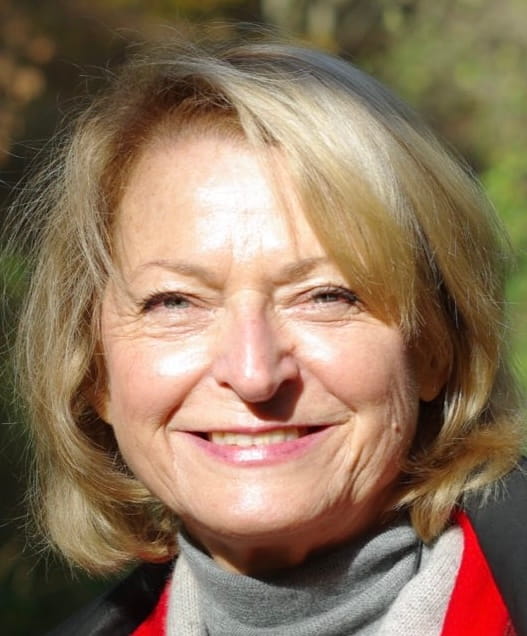
By Dr Dragana Avramov, Senior Scientific Fellow, PSPC, and Vice-President of Union of International Associations
Breakthrough European research about educational success for all (ACHIEVE4EDU) has been launched in September 2026 amid alarming news revealing students’ sharp decline in basic competences, reaching the lowest average performance in reading and mathematics ever recorded by the OECD Programme for International Student Assessment (PISA).
ACHIEVE4EDU responds to the calls for urgent action to reverse such decline for all students. ACHIEVE4EDU officially begins its three-year journey as a Horizon Europe-funded Research and Innovation Action, backed by €2,623,635.92 in EU funding (Grant Agreement No. 101288796). Coordinated by a team from the Universitat de Barcelona (UB), the project brings together 11 partner institutions from nine European countries. This research will move forwards from documenting trends in poor performance of European students in basic skills such as reading, mathematics and science, and inequalities in learning outcomes, to generating knowledge about policies and interventions that have demonstrated Scientific Evidence of Social Impact (SESI). High performing education systems worldwide, and schools and policies that have already taken steps in Europe, have achieved extraordinary results that this research will now make it possible to apply across the European Union.
Over the next 36 months, ACHIEVE4EDU will identify, validate and transfer Scientific Evidence of Social Impact in education, evidence that has demonstrably improved student achievement in reading, mathematics and science across diverse contexts, and that has been scientifically shown to be replicable. The project will review the existing scientific evidence behind education policies and practices that meet these SESI criteria; analyse how numerous policymakers and practitioners have successfully adopted them; co-create dialogic training for policymakers and practitioners; build an open-access digital platform for SESI resources; and support the transfer of this evidence into education policy across the EU.
ACHIEVE4EDU pays particular attention to students from low socio-economic backgrounds and other groups facing greater difficulties within the education system. The evidence the project will identify, validate and scale is in line with the broader understanding of Scientific Evidence of Social Impact, as these practices have also been shown to strengthen social cohesion and build more inclusive learning environments, helping to reduce educational inequalities across Europe.
‘Twenty years of research point to the same finding: schools in the most complex socioeconomic contexts that sustain SESI-based educational actions over time don't just catch up with their country's average, they surpass it, while strengthening coexistence and social cohesion’ said Marta Soler, Coordinator of the Project's Knowledge Committee. REVERS-ED, our previous Horizon Europe project now drawing to a close, has shown that what these schools have in common, from the most disadvantaged contexts to the upper middle class, is the sustained implementation of SESI-based educational actions over time. That is exactly the evidence ACHIEVE4EDU will turn into actionable policy.
The ACHIEVE4EDU consortium includes leading research universities, Universitat de Barcelona (Spain, coordinator), Dublin City University (Ireland), University of Cyprus, University of Siena (Italy), Universidade do Porto (Portugal) and New Bulgarian University, alongside national education authorities and institutes, Institutul de Științe ale Educației (Romania), the Institute of Education of Bulgaria, and Inspeção-Geral da Educação e Ciência (Portugal), a civil society organization, Support Group Network (Sweden), and a research SME and knowledge broker, Population and Social Policy Consultants (Belgium) (https://cordis.europa.eu/project/id/101288796).
About ACHIEVE4EDU
ACHIEVE4EDU (‘Advancing the Use of Scientific Evidence of Social Impact in Education Policy and Practice to Improve Student Achievement’) runs from September 2026 to August 2029 (https://cordis.europa.eu/project/id/101288796).
Media contact: Dragana Avramov; avramov@avramov.org; +32473351430
Funded by the European Union. Views and opinions expressed are however those of the author(s) only and do not necessarily reflect those of the European Union or the European Research Executive Agency (REA). Neither the European Union nor the granting authority can be held responsible for them.
Issue #27 – November 2026